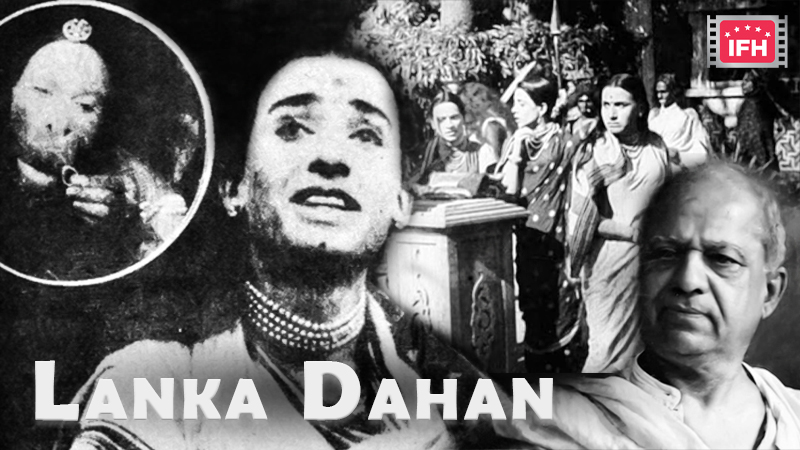

Since Lanka Dahan (1917), double roles have become a popular trope in Indian cinema, offering rich storytelling opportunities. The movie showed Anna Salunke in dual roles directed by the father of Indian cinema, Dadasaheb Phalke. He was, in fact, the first one to start the double role trend in Bollywood.
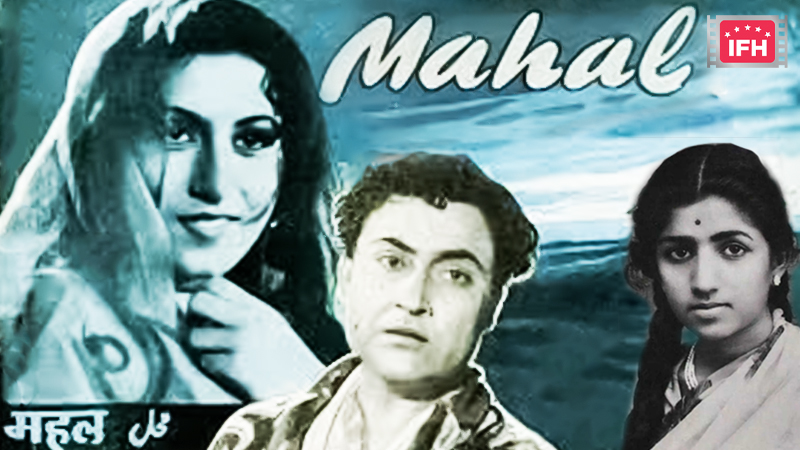
Films like Patni Pratap (1923), Kashmiri Sundari (1925), and Awara Shahzada (1932) followed the trend, capitalizing on the popularity of double roles. With the 1949 movie Mahal, starring Ashok Kumar, a new kind of cinema emerged based on the theme of reincarnation. The film showed Madhubala and Ashok Kumar, both in double roles, being reborn in the present age in different circumstances. The movie not only celebrated the Golden Jubilee but also made Lata Mangeshkar a star singer due to the super-duper hit song “Aayega Aanewal”a” in the movie.
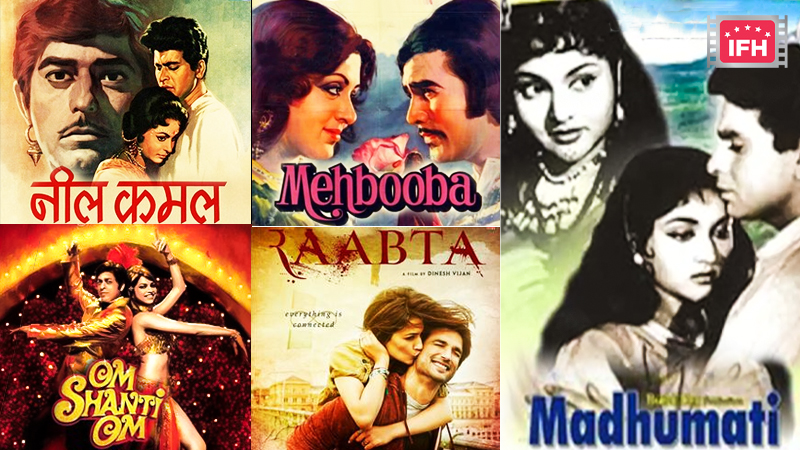
Mahal’s success triggered a wave of reincarnation-themed double role films, including Madhumati, Neelkamal, Milan, and more recently, Om Shanti Om and Raabta.
Double roles and reincarnation have been staples in Indian cinema, enabling intricate storytelling and highlighting actors’ range.These themes have evolved over the decades, reflecting societal beliefs and cinematic trends.
Early Instances and Evolution
The fascination with double roles in Indian cinema can be traced back to the silent film era. Dadasaheb Phalke’s Lanka Dahan (1917) marked one of Indian cinema’s earliest double roles, with Anna Salunke playing Rama and Sita.
The 1943 film Kismet, directed by Gyan Mukherjee, presented Ashok Kumar in a double role as Shekhar and Madan. This film was notable for introducing bold themes, including an anti-hero protagonist and an unwed pregnant woman, and it achieved unprecedented success, running for three years in a Calcutta theater. Golden Era of Bollywood
Reincarnation Theme in Indian Cinema
The theme of reincarnation added a mystical dimension to Indian films. Kamal Amrohi’s Mahal (1949) is often credited as one of the first Indian films to explore reincarnation. Starring Ashok Kumar and Madhubala, the film tells the story of a man who becomes obsessed with a mansion and believes he is the reincarnation of its former owner. The film’s haunting narrative and the song “Aayega Aanewala” contributed to its success and set the stage for future films on reincarnation.
Following Mahal, Bimal Roy’s Madhumati (1958) further popularized the reincarnation theme. Starring Dilip Kumar and Vyjayanthimala, the film intertwines romance and mystery, depicting star-crossed lovers reunited in a new life. Its success inspired numerous films exploring reincarnation, such as Neelkamal (1968), Milan (1967), Mehbooba (1976), Kudrat (1981), Karz (1980), Om Shanti Om (2007), and Raabta (2017)
Shakespearean Influence and Comedic Double Roles
The influence of Shakespeare’s “The Comedy of Errors” is evident in Indian cinema’s portrayal of double roles. Ishwar Chandra Vidyasagar’s play Bhrantibilas, based on Shakespeare’s work, inspired several film adaptations. The Bengali film Bhrantibilas starred Uttam Kumar and was later remade in Hindi as Do Dooni Chaar (1968) with Kishore Kumar and Angoor (1982) with Sanjeev Kumar. These films employed the double role trope to create comedic situations arising from mistaken identities.
Notable Double Role Performances
Several actors have delivered memorable performances in double roles, showcasing their range and contributing to the films’ success:
Technological Advancements and Modern Interpretations
Dilip Kumar in Ram Aur Shyam (1967): He
portrayedtwin brothers with contrasting personalities, setting a benchmark for double role performances.
Hema Malini in Seeta Aur Geeta (1972): Played twin sisters with opposite traits, leading to comedic and dramatic situations.
Amitabh Bachchan in Don (1978): Essayed the roles of a ruthless gangster and his lookalike, a simpleton tasked with infiltrating the underworld.
Sridevi in ChaalBaaz (1989): Portrayed twin sisters separated at birth, showcasing her versatility in both comedic and dramatic scenes.
Shah Rukh Khan in Duplicate (1998): Played both a criminal and his doppelgänger, leading to a mix of action and comedy.
Kangana Ranaut in Tanu Weds Manu Returns (2015): Portrayed both the protagonist and a lookalike athlete, adding depth to the romantic comedy.
Advancements in film technology have allowed for more seamless portrayals of double roles. Techniques such as motion control cameras and CGI have enabled actors to interact with their counterparts more convincingly. Films like Fan (2016), where Shah Rukh Khan played both a superstar and his obsessed fan, utilized these technologies to enhance storytelling.
Cultural Significance
The recurring themes of double roles and reincarnation resonate with Indian audiences due to cultural beliefs in rebirth and destiny. These narratives explore questions of identity, fate, and the eternal nature of the soul, aligning with philosophical concepts prevalent in Indian traditions.
Conclusion
Double roles and reincarnation in Indian cinema enable complex storytelling and showcase actors’ versatility. From early adaptations to modern interpretations, these themes continue to captivate audiences, reflecting the evolving landscape of Indian cinema.


Leave a Comment