

The ’90s saw the emergence of the 3 Khans, viz., Aamir Khan, Salman Khan, and Shah Rukh Khan. While romance and masala films ruled the 90s, Ram Gopal Varma took a different route. He made Shiva (1990), a film that shed light on college politics and its devastating impact on youth. Varma explored similar themes in Satya (1998), showing how innocent youths’ dreams were crushed by Mumbai’s underworld. Both films were super hits and made Ram Gopal Varma a name of repute!!
Shekhar Kapur, who won stardom with Mr. India, made a stunning comeback with Bandit Queen (1994), a realistic film that gave a new definition to his career. Bandit Queen depicted the bitter tale of dreaded lady dacoit Phoolan Devi, who later surrendered and turned politician. The movie won international acclaim.
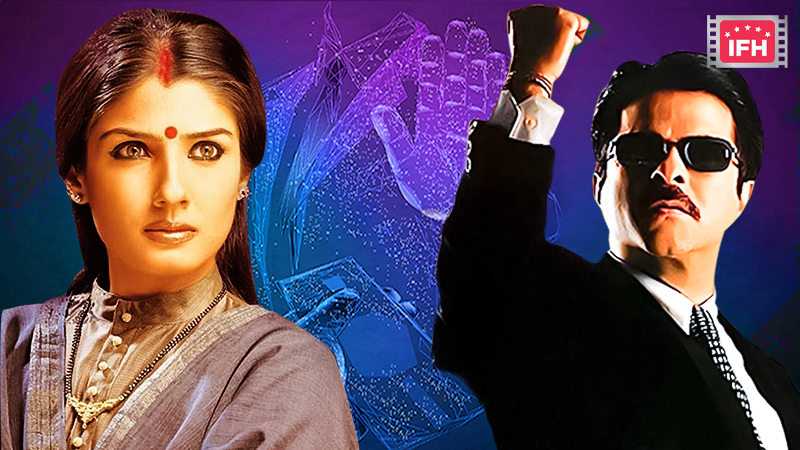
A Decade of Provocative Political: 80s Indian Films
The Babri Masjid demolition in 1992 sparked widespread communal violence, inspiring filmmakers to make impactful movies that highlighted how politicians fueled hatred and shattered national unity. Filmmaker Mehul Kumar made Krantiveer (1994) starring Nana Patekar and Dimple Kapadia. The scene that won maximum applause was the emotional scene where Patekar brings home the truth that the Almighty has made all of us equal by mixing the Hindu and the Muslim blood. The film was not just a super hit but won a National Award!
After Mehul Kumar, eminent film wizard Mani Ratnam, with his ffilm Bombay (1995),B exposed the true face of the political leaders. The film enlightened the audience on how the political leaders divide society through communal riots. The filmmakers crafted a love story between a Muslim girl and a Hindu boy, set against the backdrop of the Babri Masjid demolition.
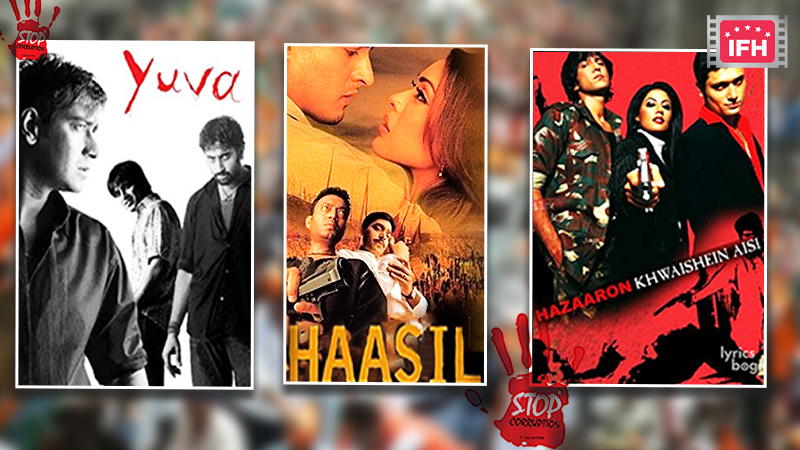
Reel Reflections of India’s Political Landscape
Later, Gulzar once again came up with a thought-provoking political thriller, Maachis (1996), portraying the hard realities of life. The film took up the sensitive issue of the Sikh uprising in Punjab in the 1980s. It showed how extreme atrocities forced even the ordinary youth of Punjab to take up weapons and turn terrorists. After the success of Maachis, Gulzar made another film, Hu Tu Tu, in 1999, on politics, exposing how cunning politicians convince ‘honest people’ to enter politics and later extract all the juices from the opportunity given by them.
In this film, Mohan Agashe’s politician character manipulates a vulnerable school teacher (Suhasini Mulay) to further his agenda. Nana Patekar’s character adds a layer of social commentary, poking fun at the country’s political landscape with a kabaddi analogy. Despite its strong storytelling, the movie didn’t match Aandhi’s box office success.

The decade ended with a mind-blowing film, Vaastav (1999), starring Sanjay Dutt in a career-best performance! The film depicted the harsh reality of Marathi unemployed youth of Mumbai, who, forced by poverty and unemployment, took to the gun and became puppets of politicians!!!


Leave a Comment