

The Bollywood stars from Devadasi family is not too accurate as lot of earlier information on them is not recorded on the internet.
While we know the across that the idea to abolish the devadasi system had gathered a lot of support in the 1930’ we are aware of many Bollywood stars who have come from diverse backgrounds. The historical practice where women dedicate their life to the deities and temples and is very different from the modern film industry. Some of the devadasis have achieved fame in the arts including the cinema. It hasn’t defined their characteristics in their career.
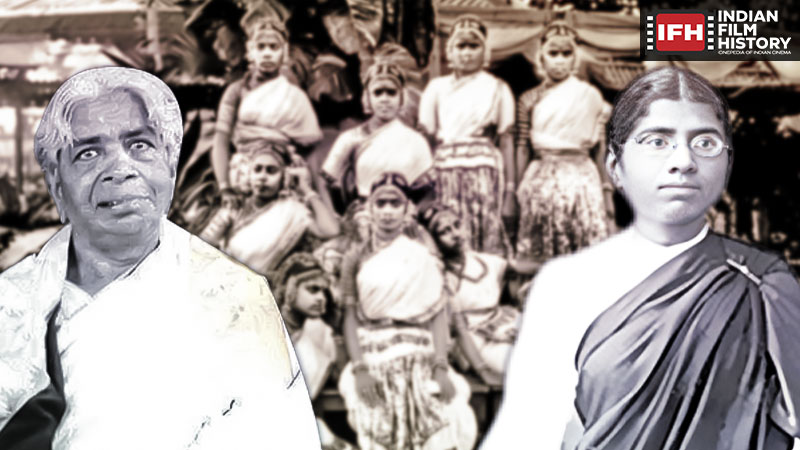
Devadasi were talented and were perfect for singing or using the musical instruments. In 1931, there was coincidence when activists like Moovalur Ramamitham Ammaiyar and Muthulakshmi Reddy were demanding to abolish the devadasi system, talkie movies on the other hand were trying to introduce them in Madras with no sound studios.
The devadasis movement gained pace when many from the community started their own drama troupes. The Devadasi community’s artistic talents continued to be in demand despite the system’s abolition in 1940. The Vadhyars played a key role in film production, handling script direction and song composition.
Breaking Stereotypes
Once one of the members from the devadasi entered the film industry, it took no time for others to follow and then there were several generations of devadasi community to have been in films thereafter. The devadasis had lost the patronage of the temples and the zamindars or the landlords by early 20th century.
Special trains were run for Devadasis’ performances, featuring women like M.S. Subbulakshmi as heroines, with Carnatic-style playback singing.
Devadasi men like K S Krishnamurthy from the community became choreographers or script writers and even directors.
The Gramophone Company recorded devadasis in the 1940s. Due to financial struggles, they agreed to record. They were taken to cities like Mumbai for recordings and later shifted the cultural scene to Madras, influencing the film industry. Similarly, many other from the community had made it big in the film industry.

The focus of the devadasis started in Tamil films with music and dance and then on the plot and the script. The trend continued for a long time.The government passed the ban legislation, and with time, the devadasis vanished into thin air. But the community had shown their glamour through the films.
Devadasis and Bollywood
The Devadasi system in South India involved women dedicated to temple services, often skilled in dance and music. While some of their descendants had entered the film industry there is no real lineage connection to the Bollywood stars.
The women from Devadasi community had got recognition in various fields mainly the cinema. They held respectable positions in the society as well and were patrons of arts. However, with the changing norms, their roles and their influence had also declined. Their Bollywood success stemmed from talent, not their Devadasi roots. The focus was on their skills, not their lineage or historical background.
Celluloid Triumph
Actresses like Vyjayanthimala, Meenakshi Seshadri, and Aditi Rao Hydari have been influenced by or portrayed Devadasi traditions in their work, showcasing elegant dance skills and exploring the community’s legacy.She had received critical acclaim for her role in the film and her exquisite performance.
T. Rajakumari was a prominent heroine in South Indian films. She was a part of the Devadasi community.

From Margins to Mainstream
Other actresses from the drama troupes are Balamani and Rushyendramani who performed after the devadasi system was abolished.
Some of the films that were based on the Devadasi system. Some of the films that were related to the Devadasi system were in 1976 Bala, a documentary on the dance performance by Balasaraswati directed by Satyajit Ray. Produced for Government of Tamil Nadu and National Centre for the Performing Arts.
In 1984 the film Giddh portrayed the theme of exploiting the young girls in the name of Devadasi garb. A film starring Om Puri and Smita Patil was set in Maharashtra and Karnataka. The documentary “Mahananda” (1987) on Devadasi life was by Mohan Kavia.
In the year 2000 to 2001, Krishnadasi a television serial on Sun TV was based on the Tamil novel Krishnadasi by Indra Soundar Rajan.
From the period 2002 to 2006, Rudra Veenai, a television serial based on the lineage of Devadasi had a critical role in its story that revolved around a mysterious musical instrument. The television series was popular.
In 2009, Jogwa was a national award-winning Marathi film which featured the love story that revolved around Devadasis.

Unveiling Hidden Stories
Beeban Kidron directed the 2011 documentary “Sex, Death and the Gods.” The same year, the biography “Balasaraswati: Her Art and Life” was released.
In 2012, A controversial documentary on the lives of the Devadasi or the sex workers called the Prostitutes of God on The Vice Guide to Travel a travel show style documentary show released as a part of the VBS television division.
In 2016, the TV series “Krishnadasi” aired on Colors TV, depicting the lives of Devadasis in a narrative connected to Krishna.

Reclaiming the Narrative
In 2011, Star Jalsha’s “Agnijal” depicted a romance between a king and a Devadasi. Later, in 2021, “Shyam Singha Roy” highlighted the exploitation of young Devadasis in 1960s West Bengal. Starring in the film were Nani and Sai Pallavi.
In 2024, Bulgarian director Konstantin Bojanov’s Hindi thriller “The Shameless” featured Omara Shetty as a Devadasi protagonist.


Leave a Comment