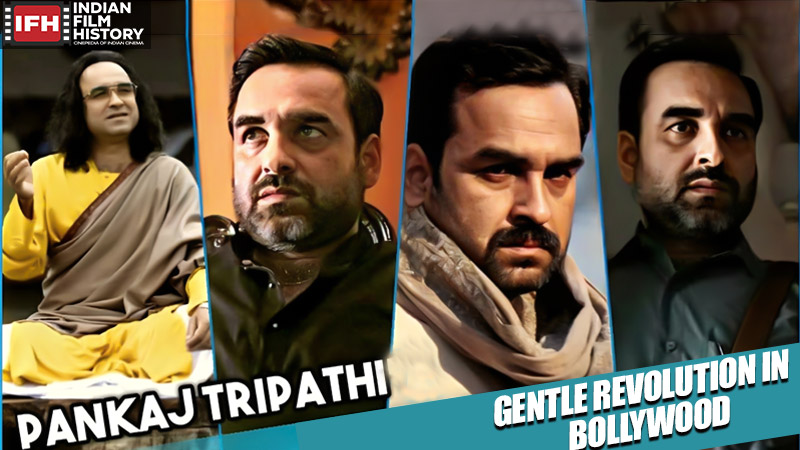

Bollywood is synonym of glitz , glamour and fashion, the first things that comes to mind on hearing the word bollywood are shining faces, tall heroes, action scenes and big budgets. But Pankaj Tripathi is redefining the term bollywood itself. There is no show-off, no noise. Yet his presence on screen is no less than a melody. He does not shout, but is heard in every scene – as if a slow, deep river is flowing.
There is depth in this man, not glamour
Pankaj Tripathi’s journey began from Belsand village in Gopalganj district of Uttar Pradesh – the same village where there are fields, ploughs, hand-made stoves and children’s laughter is mixed in the soil. It was from here that a boy emerged, who did not dream of becoming a hero, he just found peace in standing on stage and speaking.
I had not come to Mumbai to become an actor, I had fallen in love with acting.”
– Pankaj Tripathi
When this man comes in front of the camera, there is no ‘performance’ in him, there is a truth. It seems as if he has lived the character, not played it.
Where even silence becomes dialogue
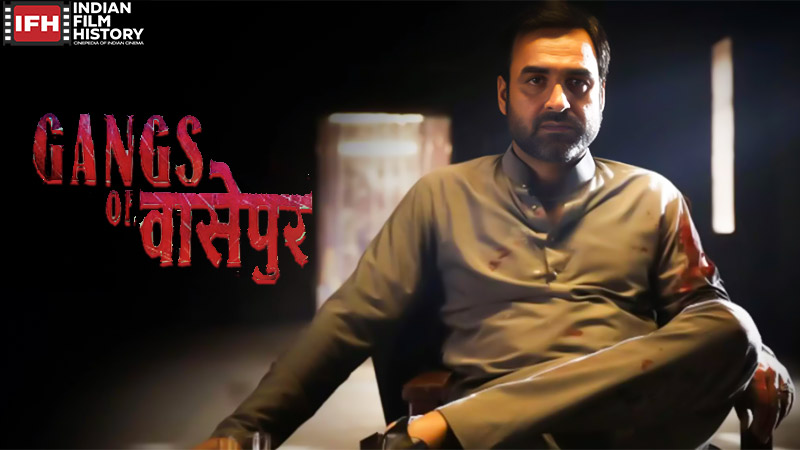
Pankaj Tripathi’s biggest strength is restraint.
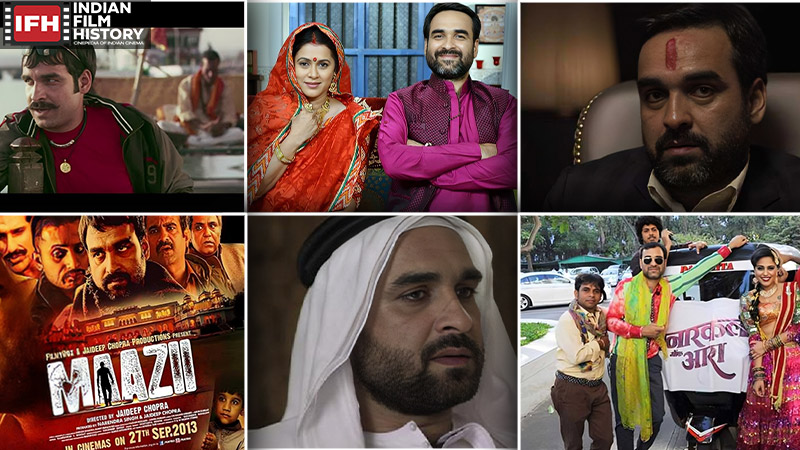
His magic works on screen even without dialogue. Whether he is in “Gangs of Wasseypur”, or the Kaleen Bhaiya in “Mirzapur”, he portrays each character with utmost dedication and gets into skin of the character.
His acting is not a show-off, rather it is a culture. He is not loud, but forces you to stop and think. His eyes speak, a slight tilt of the body changes the story.
> “Acting is not action, it’s reaction.”
This line fits Pankaj Tripathi perfectly
Characters that seem to come out of life
What is special about Pankaj Tripathi’s characters?
He doesn’t fly like a superhero,
Nor does his entry draw applause,
But when he is on screen, the heart silently beats with him.
A government officer in the film “Newton”, a worried father in “Gurgaon”, a priest sitting on the ghat in “masaan”, or that gangster in “Ludo” – every role is such that it seems like he is a man from our street.
His characters have a hero, a villain, and most of all a human being.
Connection with the people rather than popularity
Pankaj Tripathi is not in the race for mass appeal, but still he touches the audience of every class. The reason is – his language, gestures and style connected to the ground. When he talks on screen in Bhojpuri or Magahi tone, not just dialogue, but a geography stands in front of us.
He neither makes fun of UP-Bihar, nor the village an object of pity – rather he presents that land with respect on screen. Today, when every actor is lost in the London locations or the dialogues of New York, Pankaj Tripathi emerges as a hero connected to the village Chaupal, tea shop and the sweet and sour things of relationships.
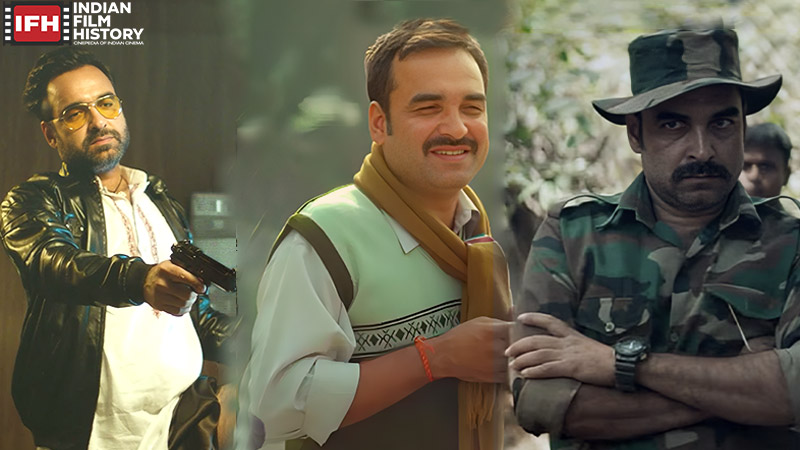
OTT and the return of real acting
Pankaj Tripathi’s real flight started when OTT platforms gave him the space he was looking for for a long time. Series and films like “Sacred Games“, “Criminal Justice“, “Mirzapur“, “Gunjan Saxena“, “Kaagaz”, “Sherdil” proved that Pankaj Tripathi is no longer a hero of parallel cinema – he is now in the mainstream.
And the biggest thing – his popularity is neither artificial nor viral.
He is on everyone’s lips because he seems real.
A mirror of a new generation
Today’s generation wants to see a “real” person in Bollywood more than a hero. They don’t want a macho hero with 6 packs – rather they want someone who trembles while fighting with his father, who makes a mistake and accepts it, who loses in love but considers defeat as greatness.
All this is found in the characters of Pankaj Tripathi.
He doesn’t create any ideal in every scene, he just makes an honest effort – and perhaps that is why he enters every heart
For today’s youth, he is not a poster boy, but a relatable example. A face that doesn’t shine, but lasts.
Observation is not his method, not actig
Pankaj Tripathi himself says –
I don’t act, I remember people after seeing them and present the same.”
The Art of Understated Brilliance
This may sound simple, but this is where his biggest quality is hidden – observational acting. He doesn’t create characters, he picks them up from somewhere. Maybe it is the gait of some Belsand uncle, the smile of some relative or the language of some old memory.
His acting did not come from any school, it came from the school of life.
The artist changing the definition of success
Today when most actors go on social media detox after a film flops, Pankaj Tripathi remains the same –
neither bigger than the film, nor smaller than the film.
He is neither worried about TRPs nor Twitter trends.
His success is that of an actor who:
Did small roles in TV,
Got rejected fifty times in films,
And still waited, without making a sound.
Pankaj Tripathi’s story says that talent only needs an opportunity, not bright lights.
Language, tone and soul – a complete package
There are very few actors who consider language and dialect as a part of acting.
Pankaj Tripathi’s accent, especially the Purvanchali accent, not only touches the heart but also gives representation in cinema to those regions that are often made a laughing stock.
At the centre of Bollywood’s changing souIf the Bollywood of the 2000s was of star-kids and NRI dreams, the Bollywood of the 2020s is of actors like Pankaj Tripathi.
Why?
Because now the audience wants to see the truth – not glamour.
They want a story that comes from the heart and rolls on the tongue.
A Master of Nuance and Depth
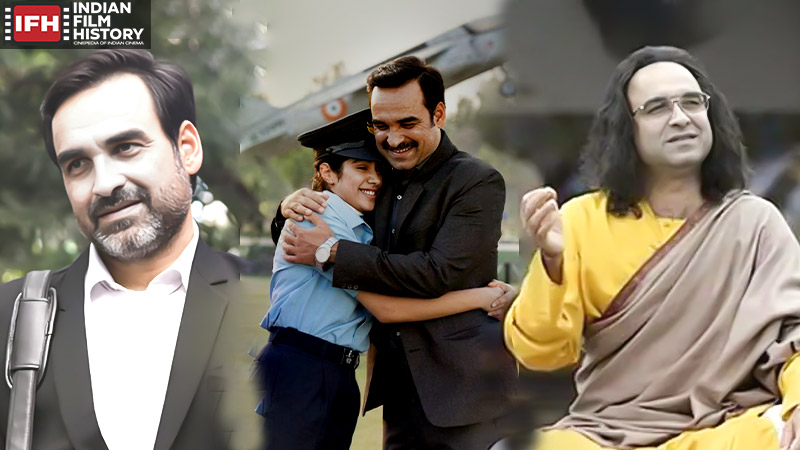
While OTT platforms have given freedom to directors, actors like Pankaj Tripathi have given truth and dignity to those stories.
They neither fit into any trend nor any category.
He is a genre-proof actor — he adapts to every film, just like water takes shape in any vessel.
Not an end, a permanent beginning
There is no “peak” to Pankaj Tripathi’s acting, because his career is “evolving”.
Every new film, every new show opens up a new corner of him.
His appeal is neither time-bound nor age-bound — he is an artist who will be relevant in every decade, because his acting is made of the people, for the people.
An artist who teaches that simplicity is the greatest style
When today’s youth is trying to prove themselves in any field, Pankaj Tripathi teaches them:
It may take time, but don’t give up honesty.
Don’t choose glitz, look for depth.
In the race to become a hero, remain human.
Pankaj Tripathi is not a superstar — he is a movement. A slow revolution that is echoing silently amidst the noise of Bollywood.
They remind us that cinema is not just entertainment, it is also representation. And when an actor brings your own voice, movement, thoughts and pain to the screen, he is not just an actor – he becomes your own.


Leave a Comment